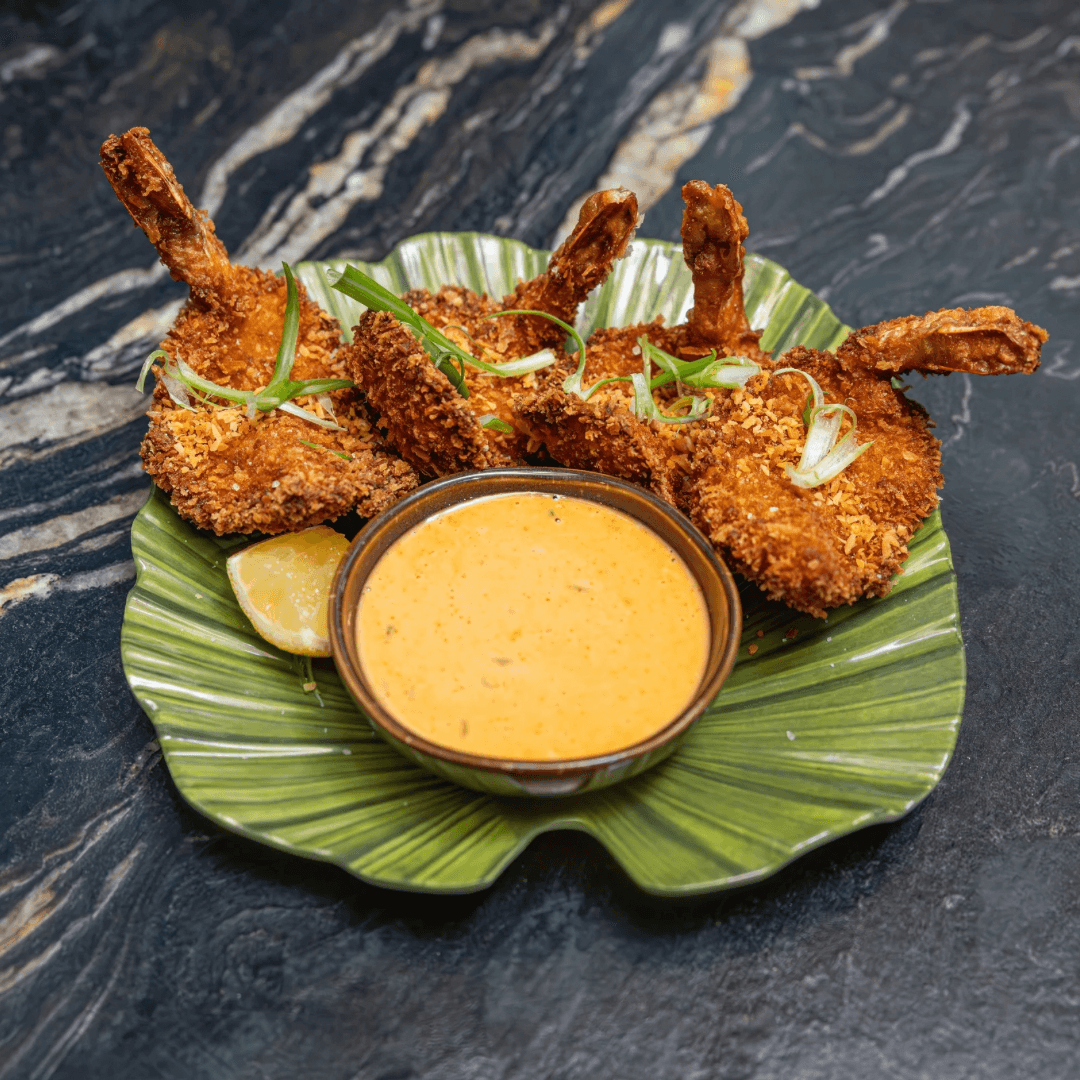

Coconut Shrimp at Callisto — A Tiki Bar Classic Done Right in Downtown Bentonville
Coconut shrimp is one of those dishes that arrives with a reputation, usually earned in mediocrity — frozen, pre-breaded, reheated, served with a fluorescent sweet-and-sour sauce at chains that treat it as an obligation rather than a recipe. Callisto's version starts from a different premise. Panko-crusted, fresh, fried to order, finished with rooster sauce, and served at a bar that has genuine tiki roots — this is coconut shrimp in its natural habitat.
Here's what you need to know before you order.
What Is the History of Coconut Shrimp and Why Does It Belong at a Tiki Bar?
The connection between coconut shrimp and tiki bar culture is not accidental — it's essentially the dish's origin story in the American context.
Coconut shrimp first appeared during the post-WWII tiki craze, when island fever had struck the country and anything remotely tropical or beachy was in demand. Rum-based tropical cocktails like Mai Tais and Blue Hawaiians paired naturally with island-inspired foods, and coconut-crusted shrimp became equally popular as part of that moment. It remains a popular dish at tiki bars in the Caribbean and the Florida Keys — venues that share DNA with what Callisto is doing in downtown Bentonville.
The longer history runs deeper. The earliest known written reference to a shrimp dish incorporating coconut comes from a 16th-century Portuguese explorer, who noted in his journals that he had enjoyed a meal of shrimp with cumin and coconut during a visit to India. From there, versions of the dish spread through Southeast Asia, the Caribbean, and eventually the United States, taking on different forms in each context. The panko-crusted, sweet-and-spicy American tiki bar version is just the most recent chapter in a long culinary thread.
At Callisto, a tropical speakeasy built around rum cocktails, tiki aesthetics, and deliberate atmosphere, coconut shrimp belongs the way it belonged at the tiki bars of the 1950s and 60s — as food that makes sense in the room it's served in.
Why Does Callisto Use Panko Instead of Regular Breadcrumbs?
This is a kitchen decision worth understanding, because it directly affects what you taste.
Panko is made from bread with more air pockets than regular bread, which means when it's fried, it comes out much crunchier and crispier — and stays that way longer than regular breadcrumbs. Panko's light, airy texture makes it especially effective for fried food because it absorbs less oil than standard breadcrumbs, keeping food crispier and less greasy.
For coconut shrimp specifically, that oil absorption difference matters considerably. A standard breadcrumb coating picks up oil during frying and begins softening almost immediately — the window between "perfectly crispy" and "going soft" is short. Panko is lighter and tends to keep its crispness as it cools, where traditional breadcrumbs can get soggy fairly quickly.
The practical result at Callisto: the coconut shrimp arrives with a crunch that holds up through the plate. You can carry a full conversation, order another round, and the texture remains where it should be. That's not guaranteed with heavier breading, and it's the difference between a plate worth reordering and one that only works in the first three minutes.
The coconut in the crust also benefits from panko's neutral flavor. Panko has less of a caramelized flavor than regular breadcrumbs since it's made from crustless white bread, which means the coconut's sweetness comes through cleanly rather than competing with a bready background note.
What Does Callisto's Coconut Shrimp Actually Taste Like?
The flavor profile moves in a clear sequence: sweet first, then savory, then heat.
The shrimp inside is tender — the panko crust protects it during frying, trapping moisture and preventing the overcooking that turns shrimp rubbery. The coconut in the crust delivers sweetness that's present but not cloying, grounded by the savory crunch of the panko. That combination — sweet, savory, genuinely crispy — is what makes coconut shrimp compelling in its best versions.
Rooster sauce (Huy Fong sriracha) finishes the dish, and its role here is specific. The fermented chili heat and vinegar tang of sriracha cuts directly through the sweetness of the coconut crust, creating contrast that keeps the dish from sitting heavy. Without it, the plate would be pleasant but one-note. With it, you get something that cycles through sweet, savory, and spicy in a way that keeps you reaching back for another piece.
The pairing of coconut and chili follows a logic that runs through Thai, Caribbean, and Southeast Asian cooking — two flavors that find each other naturally, with the sweetness of the coconut moderating the heat and the heat preventing the coconut from tipping into dessert territory.
How Spicy Is the Rooster Sauce Finish?
Approachable for most, with some heat that builds gradually. Sriracha sits at roughly 1,000–2,500 Scoville units — meaningful warmth, significantly milder than most hot sauces, and applied here as a finishing element rather than a dominant glaze. The sweetness of the coconut crust runs interference, which means the perceived heat lands softer than the same amount of rooster sauce would on a plainer plate.
For guests who actively avoid spice, it's worth mentioning to your server. For everyone else, the heat level is designed to add character rather than dominate — the kind of warmth that makes the second piece feel as good as the first rather than building to a point of discomfort.
Is Coconut Shrimp a Good Choice for Sharing?
It's one of the more naturally shareable plates on the menu. Individual pieces, easy to eat by hand, no division of portions required — the format works for any table size without any coordination. For a group of two it's a generous first plate or a mid-night snack. For a larger birthday or celebration table it orders easily alongside other plates and disappears without anyone counting pieces.
The one note worth knowing: the panko crust is at its best freshest. Like all fried food, it holds well but not indefinitely. Order it when the table is ready to eat it rather than as a placeholder for later in the evening.
What Should I Drink with Coconut Shrimp at Callisto?
Rum-based tropical cocktails like Mai Tais paired with coconut-crusted shrimp in the original tiki bar context, and the pairing logic still holds. The sweetness in the coconut crust echoes tropical fruit notes in rum cocktails. The sriracha's heat calls for something with acidity and freshness to cut through it.
Callisto's cocktail program, built around rum, fresh citrus, and house-made syrups, hits both targets naturally. A drink with fresh lime and pineapple will cut through the richness of the fried crust and complement the coconut's sweetness without getting lost. Something with passionfruit or mango will run parallel to the tropical notes in the shrimp rather than contrasting them — a different but equally valid approach.
Avoid anything heavily cream-forward or dessert-sweet alongside this plate — the coconut crust is already carrying sweetness, and piling more on top pushes the combination past where it wants to go.
If you're ordering the coconut shrimp as part of a larger spread that includes the Korean Fried Cauliflower, the gochujang heat of the KFC sauce and the sriracha finish on the shrimp means almost anything citrus-forward on the cocktail menu will serve the table well.
When Is the Right Time to Order Coconut Shrimp During the Night?
Early or mid-evening works best. As a first plate, the coconut shrimp is fast to arrive, easy to share while the table gets settled, and substantial enough to provide a real anchor before cocktails start landing. It works alongside the Hurricane Popcorn or the Shishito Peppers as part of a first-round spread, or on its own as the table's opening move.
Mid-night it holds up well as the room fills out and rounds stack up. Later in the evening, when heavier plates have already come through, it's lighter than the Potato Croquettes but still substantial enough to feel like a real order rather than a snack. The sweet-and-spicy profile also functions as a useful palate reset after more spirit-forward or bitter cocktails.
How Does the Coconut Shrimp Fit Into the Wider Callisto Menu?
Callisto's food menu covers a deliberate range — lighter plates for early in the evening, more substantial options as the night deepens, and enough variety that a table can build a spread that doesn't repeat itself. The coconut shrimp sits in the middle of that range: more filling than the Hurricane Popcorn or Shishito Peppers, lighter than the Potato Croquettes or Manapua Pork Belly Buns.
For a two-person table, the coconut shrimp pairs naturally with the Yellowfin Tuna Poke — one warm, one cold; one rich and sweet, one clean and briny; both easy to share and quick to arrive. For a larger group building a full spread, it belongs alongside the Korean Fried Cauliflower and the Cream Cheese Rangoons as part of a first wave of plates that covers different textures and flavor profiles without any single dish overwhelming the others.
Executive Chef Alex Siharath designed the food program to work this way — as a sequence rather than a list, with plates that complement each other and the cocktails rather than compete for attention. The coconut shrimp earns its place in that lineup by being clear about what it is: a tiki bar classic executed with enough care that it feels right at home.
Is Callisto a Good Spot for Dinner and Cocktails in Downtown Bentonville?
For visitors and locals alike, Callisto has become one of the more compelling evenings available in Northwest Arkansas. The hidden entrance through Midnight Gallery at 407 SW A St, the tiki-speakeasy atmosphere built by owners Braxton and Izaak Barrett, the cocktail program built on fresh juice and house-made syrups — it adds up to an experience that doesn't feel available anywhere else in the region.
For people coming through Bentonville for Crystal Bridges, the Razorback Greenway, or a night on the Bentonville square, Callisto tends to be the recommendation that sticks. The coconut shrimp — arguably the most historically appropriate dish on the menu for a bar with genuine tiki identity — is a reliable part of why.
Reservations are strongly recommended, particularly Thursday through Saturday. The bar fills up and the entrance is worth arriving for rather than discovering you can't get in. Book at callisto.bar.
Why Callisto's Coconut Shrimp Earns Its Reputation
Coconut shrimp has been continuously popular since the tiki era of the 1950s and 60s — a track record that outlasted most of what surrounded it from that period. The dish endures because the combination of sweet, savory, crispy, and oceanic is genuinely satisfying in a way that doesn't require explanation or context.
Callisto's version succeeds because it takes those fundamentals seriously: panko for a crunch that holds, fresh shrimp for a tender center, rooster sauce for the contrast that keeps the plate interesting from the first piece to the last. Coconut shrimp remains a staple at tiki bars for good reason. At Callisto, it's a staple because it belongs there.
Callisto Cocktail Bar 407 SW A St, Bentonville, AR 72712 Tuesday–Thursday 4pm–11pm | Friday–Saturday 4pm–1am | Sunday 4pm–11pm Reservations: callisto.bar